
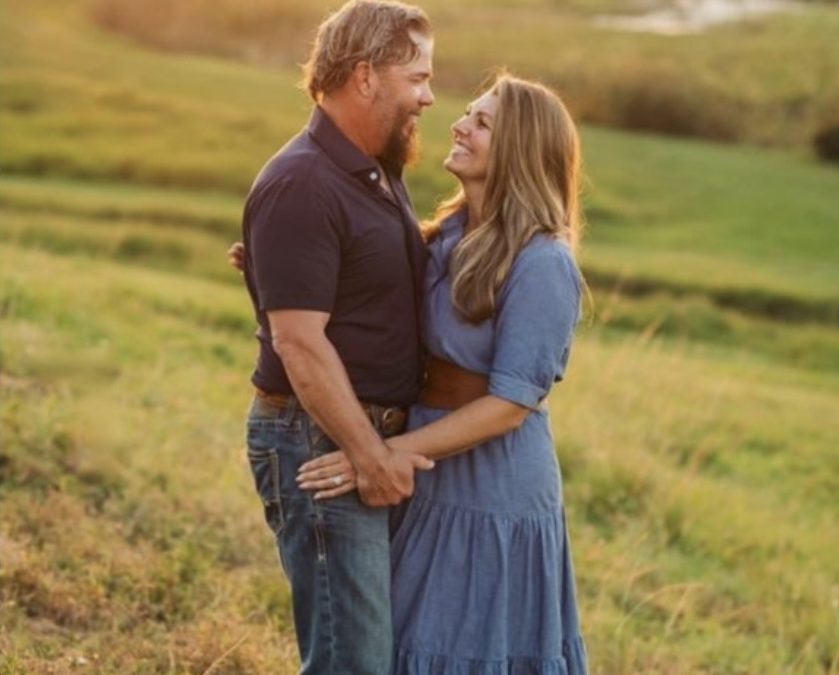
If you have listened to our Rooted and Restored Podcast episode, Real Marriage Conversation: Husbands Perspective you may remember Rob sharing how easily couples can drift apart without ever meaning to. His story offers insight into more than just It speaks to how all relationships thrive or falter depending on communication, attachment, and emotional safety.
At Rooted Therapies, we believe relationships are the foundation of healing. Whether it is a marriage, friendship, or family bond, the way we communicate determines the depth of our connection.
When Love Feels Loud but Connection Goes Quiet
Rob and I once found ourselves speaking the same language but hearing entirely different meanings. We loved deeply, but our communication lacked understanding. What we learned applies to every relationship. You can love someone and still struggle to feel seen.
Research consistently shows that emotional attunement and communication skills are among the strongest predictors of long term marital satisfaction and stability (Lavner, Bradbury, & Karney, 2016). As a therapist, I often witness how love without understanding becomes loneliness. Disconnection rarely begins with betrayal; it happens quietly through missed cues, timing issues, and emotional fatigue.
The Hula Hoop of Relationship Health
The Hula Hoop of Relationship Health
If you have ever been in session with me, you have likely heard me reference the hula hoop. It symbolizes your emotional space, what belongs to you, what you can control, and where your responsibility ends.
When we reach outside our hula hoop to manage someone else’s emotions or abandon what is inside our own, we lose connection with ourselves.
Rob once said, “I used to turn away to calm down, not realizing that in doing so, I left Lisa standing outside my hula hoop.” Over time he learned to turn toward instead of away, and I learned that sometimes staying connected means grounding myself inside my own hoop before reaching for his.
The hula hoop metaphor reminds us that healthy communication begins with self-regulation and ownership. Connection thrives when both partners tend to their own inner space and meet one another from a place of calm presence. This kind of emotional regulation aligns with what current neuroscience and relationship research identify as essential for secure, lasting connection (Lebow, 2022).
The Hidden Patterns Beneath Communication Breakdown
Most couples do not fall apart because they stop loving each other. They drift apart because their attachment styles start running the show.
Avoidant attachment tends to withdraw to regain control and safety.
Anxious attachment pursues closeness to relieve fear of disconnection.
Together, they form a push and pull pattern where one person chases while the other retreats. This dance shows up in marriages, friendships, and even parent child relationships.
At Rooted Therapies, we guide clients to recognize when they have stepped outside their hula hoop, overfunctioning, rescuing, or reacting. Healing begins when each person takes responsibility for what belongs to them and releases what does not.
Therapeutic models show that identifying these patterns increases emotional safety and resilience in couples (American Psychological Association, 2023; The Family Institute at Northwestern University, 2024).
What We Have Weathered
Our marriage has not been without pain. We have walked through betrayal, addiction, divorce recovery, step parenting, blended family adjustments, financial stress, and seasons of distance.
Healing came not from perfection but from practice. We learned that strength in marriage is not about control or composure. It is about humility, curiosity, and the willingness to stay open when things get hard.
The beauty of relational work is that repair does not erase the past; it transforms it into wisdom. Couples therapy research supports this truth, showing that repair and reconnection are measurable predictors of long term relationship health (University of Rochester Medical Center, n.d.).
From Reacting to Responding
The greatest change in our communication came when we stopped trying to win arguments and started noticing what was happening in our nervous systems.
We practiced slowing down and creating safety before speaking. Small shifts created lasting change.
- Pause before reacting. Take one breath to settle your body before you speak.
- Listen to understand. Hear your partner’s meaning, not just their words.
- Create phone free time. Protect connection from constant distraction.
- Check in intentionally. Communicate proactively instead of waiting for conflict.
- Validate emotion. Replace “You should not feel that way” with “That makes sense.”
These small habits reflect what evidence based couples therapy calls emotionally focused communication, a practice that improves emotional regulation, empathy, and long term satisfaction (Lebow, 2022).
As Rob often says, “Being calm does not mean being closed. It means staying in my hula hoop while she stays in hers and meeting in the middle.”
Healing in Real Time
Relationships do not thrive on perfect communication. They thrive on repair and reconnection. Conflict is not a sign of failure but an invitation to deeper understanding.
At Rooted Therapies, we believe healing starts in the body and grows through relationships. When couples learn to pause, breathe, and stay rooted in their own hula hoops, they create the safety love needs to expand.
If you recognize these patterns in your own relationship, know that you are not alone. Healing is possible, one conversation, one breath, one moment at a time.
Frequently Asked Questions
Q1. Why do couples struggle with communication?
Couples often struggle with communication due to emotional fatigue, attachment wounds, differing communication styles, or avoidance of vulnerability. Recognizing these patterns and working intentionally to improve communication is key to relational health (American Psychological Association, 2023).
Q2. What are effective strategies for improving communication?
Practice active listening, create phone free spaces, schedule regular check ins, validate emotions, and use “I” statements. Consistency in these habits fosters emotional safety and understanding (The Family Institute at Northwestern University, 2024).
Q3. How can someone become a better communicator?
Focus on empathy, honesty, and presence. Learn to listen to understand, not to respond. Avoid defensive reactions and practice curiosity about the other person’s perspective.
Q4. When should a couple seek professional support?
If you feel stuck in repetitive patterns, experience emotional distance, or cannot resolve conflict despite trying, couples therapy can help. Seeking support is a sign of strength and wisdom, not failure (University of Rochester Medical Center, n.d.).
References
Lavner, J. A., Bradbury, T. N., & Karney, B. R. (2016). Does Couples’ Communication Predict Marital Satisfaction, or Vice Versa? Journal of Marriage and Family, 78(3), 680–694.
https://pmc.ncbi.nlm.nih.gov/articles/PMC4852543
Lebow, J. (2022). Couple Therapy in the 2020s: Current Status and Emerging Developments. Family Process, 61(3), 761–775.
https://pmc.ncbi.nlm.nih.gov/articles/PMC10087549
University of Rochester Medical Center. (n.d.). Couples Therapy Can Help Mend a Marriage.
https://www.urmc.rochester.edu
The Family Institute at Northwestern University. (2024). Trouble Communicating with Your Partner?
https://www.family-institute.org
American Psychological Association. (2023). Healthy Communication in Relationships.
https://www.apa.org