
If you are in your 20s, or you love someone who is, you have probably felt it. The strange mix of freedom and pressure. On one hand, you can do anything. Move. Date. Travel. Start over. On the other hand, that much possibility can feel like standing in front of five million doors and being terrified to touch the handle.
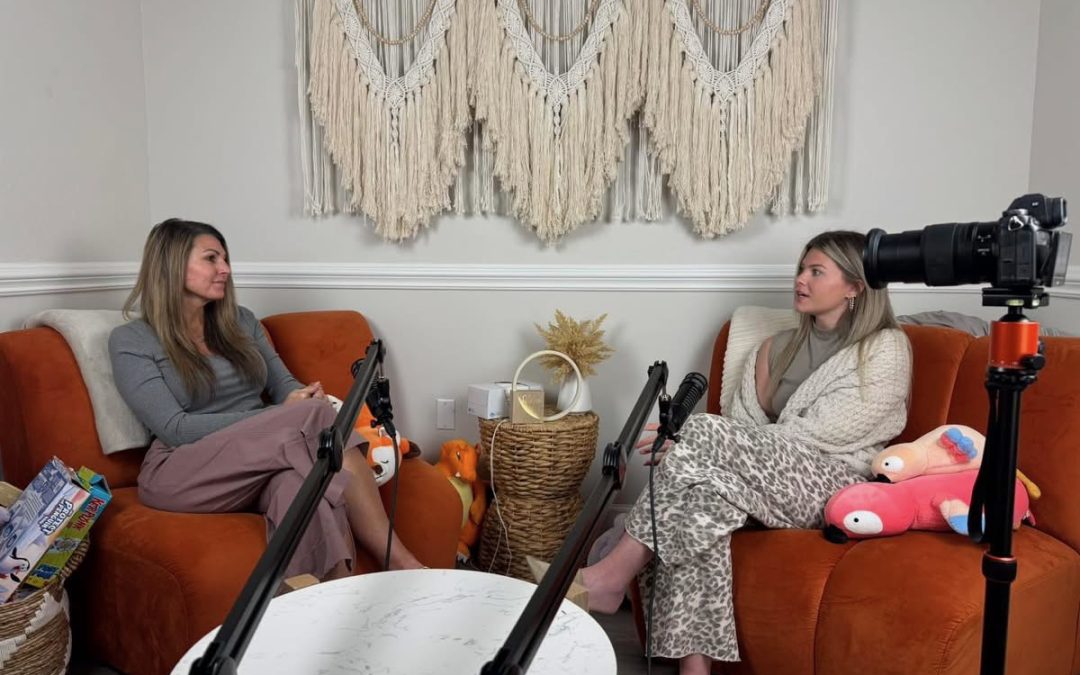
In a recent Rooted and Restored podcast episode, Kali and I revisited a moment from about a year ago when her self trust was thin and fear was running the show. Nothing magical happened overnight. What happened was something more honest. A series of brave, imperfect choices that built a sturdier inner foundation. This blog is for the young adult who feels stuck in comfort, the parent trying to hold the line without shaming their child, and the mentor who knows it takes a village.
At Rooted Therapies, we see this theme constantly. People are not lazy or unmotivated. They are overwhelmed, dysregulated, and afraid of getting it wrong. Healing looks like learning how to come back to yourself, one decision at a time.
The real issue is rarely “moving out”
Yes, our conversation centered around Kali moving into her own place, but that was simply the visible milestone. Underneath it were deeper questions. Can I trust myself to make a decision without spiraling? What if I pick the wrong thing and regret it? What if I am alone and it wrecks me? What if my life changes and I lose my place in my family? What if I cannot handle adulthood the way everyone else seems to?
Developmental psychologist Jeffrey Arnett describes the late teens through twenties as “emerging adulthood,” a distinct season marked by identity exploration, instability, and possibility. That possibility is beautiful and it can also be anxiety producing. Research shows that young adults today report high levels of anxiety and uncertainty, especially following the disruption of COVID 19 and delayed milestones. If you feel behind or frozen, you are not defective. You are navigating a complex season of life.
What self trust actually looks like
There was something Kali shared that felt important to pause on. She still has distorted thinking sometimes. That is normal. Growth is not the absence of fear. Growth is responding to fear differently.
One of the most practical shifts she described was learning to ask herself, is this factual or is this fear based? That pause is powerful. In cognitive behavioral therapy, we teach clients to identify automatic thoughts, evaluate evidence, and replace catastrophic thinking with something grounded and realistic. You can practice this yourself. What story is my fear telling me? What actual facts do I have? What is one small action that aligns with who I want to become? Action builds confidence and confidence builds
Comfort is not the enemy, but it can become a trap
There is healthy comfort. Safety while you build skills and support while you stabilize. And then there is avoidance disguised as practicality. Kali named the paralysis that can happen when you do not know your five year plan. If you cannot predict the future, you hesitate to act at all. But clarity often comes through movement, not before it.
Research on self efficacy shows that belief in your ability grows when you experience yourself handling challenges successfully, even small ones. You do not build confidence by waiting. You build it by doing. Sometimes the next right step is enough.
The parent tension: Push with support
One of the most meaningful parts of our conversation was Kali acknowledging that she did not enjoy the hard conversations and she deeply appreciates them now. If you are parenting a young adult, this is the tension. You do not want to create shame and you also do not want to enable stuckness. Hold the relationship and hold the standard.
The quality of relational support is one of the strongest predictors of emotional growth. You can say, I love you. I believe in you. And I still expect you to grow. That is not rejection. That is leadership.
Living alone did not break her. It built her.
Kali expected to crash. She imagined loneliness, isolation, maybe even depression. Instead, she discovered that her nervous system liked the quiet. She enjoyed having space that was hers. She learned to be intentional about building community and developed routines and life skills without outsourcing them.
She also named something powerful. It is important to know how to be alone and find peace before inviting someone else into your space. Relationships should nourish your life, not rescue you from it. That is emotional maturity. At Rooted Therapies, this is what we mean when we talk about breaking cycles and discovering new ways of thinking. It is not about becoming someone different. It is about becoming more yourself, with less fear driving your decisions.
Journaling and emotional clarity
Kali admitted she does not love journaling, and yet it helped her. When thoughts stay in your head, they tend to swirl. When you put them on paper, you slow them down. Writing helps the brain process emotion and reduce rumination. Even short, honest reflection can increase clarity. If you feel stuck, ask yourself what am I avoiding right now, what feels scary about it, what is the smallest doable step, and what support do I need. You do not need to be a writer. You need to be honest.
If you are in your 20s, or starting over at any age
You are not behind. You are not broken. You are not the only one who feels unsure. This season holds many doors and you cannot open them all at once. That can feel heavy. But fear does not get to be your lifelong decision maker.
Kali said it beautifully. If it does not go how I planned, it is a year of my life. I can pivot. That is self trust. Not certainty. Steadiness.
If you are a parent reading this, loving leadership often echoes later, even if it is resisted in the moment.
How therapy supports young adults and life transitions
Young adulthood is filled with identity shifts, career decisions, relationship transitions, and independence milestones. Sometimes having a neutral, trained professional walk alongside you makes all the difference. At Rooted Therapies, we provide confidential counseling in North Port, Florida for individuals, couples, and families. We specialize in anxiety, life transitions, relationship dynamics, trauma recovery, and building emotional resilience.
Research consistently shows that the therapeutic relationship is one of the strongest predictors of outcomes. Sometimes an outside voice can help young adults challenge fear based thinking, build self trust, and move forward with clarity.
If you have a young adult struggling with anxiety, avoidance, or difficulty launching into independence, counseling can be a powerful support. You can learn more or schedule a free consultation at
You do not have to navigate this alone.
References
American Psychological Association. (2019). The therapeutic relationship and treatment outcomes. https://www.apa.org/monitor/2019/11/ce-corner-relationships
Arnett, J. J. (2000). Emerging adulthood: A theory of development from the late teens through the twenties. American Psychologist, 55(5), 469–480. https://doi.org/10.1037/0003-066X.55.5.469
Bandura, A. (1977). Self-efficacy: Toward a unifying theory of behavioral change. Psychological Review, 84(2), 191–215. https://doi.org/10.1037/0033-295X.84.2.191
Cleveland Clinic. (2022). Cognitive behavioral therapy (CBT): What it is and techniques. https://my.clevelandclinic.org/health/treatments/21208-cognitive-behavioral-therapy-cbt
Kaiser Family Foundation. (2023). The implications of COVID-19 for mental health and substance use. https://www.kff.org
Pennebaker, J. W., & Chung, C. K. (2011). Expressive writing: Connections to physical and mental health. In H. S. Friedman (Ed.), The Oxford handbook of health psychology. Oxford University Press.
Rooted Therapies. (n.d.). Counseling services in North Port, Florida.
FAQ’s
Q1. Why is young adulthood so overwhelming right now? Young adulthood has always involved identity exploration, but today’s generation is navigating additional pressures. Social media comparison, economic stress, delayed milestones after COVID, dating apps, and constant exposure to other people’s highlight reels can create chronic anxiety. When there are endless options and no clear roadmap, decision fatigue sets in. Feeling overwhelmed does not mean someone is weak. It often means their nervous system is overloaded.
Q2. Why do I feel stuck even though I know what I “should” do? Knowing what to do intellectually is very different from feeling emotionally ready to do it. When fear, perfectionism, or past experiences are unresolved, the brain defaults to safety and avoidance. This is not laziness. It is protection. Therapy helps individuals understand what is underneath the avoidance so they can move forward without shame.
Q3. How do I know if fear is making my decisions? Fear-based decisions often sound like: What if I fail? What if I regret this? What if I cannot handle it? Healthy decision-making sounds more like: This might stretch me, but I can learn. If it does not work, I can pivot. Growth is uncomfortable, not dangerous. Learning to distinguish between true risk and emotional discomfort is a major part of developing self trust.
Q4. What does it actually mean to “trust yourself”? Self trust is not about being certain. It is about believing you can handle outcomes, even if they are imperfect. It means knowing that you can gather information, make a decision, adjust if needed, and recover if something does not go as planned. Research on self efficacy shows that confidence grows through action, not overthinking.
Q5. How can parents push without pushing too hard? Parents can support young adults by holding both connection and expectation. This means staying emotionally present while also encouraging responsibility and growth. Hard conversations may be uncomfortable in the moment, but when delivered with respect and belief, they often become the very conversations that build resilience.