
Where Therapy Takes Root in Relationship
At Rooted Therapies, we believe deeply in the power of . Therapy creates a consistent, protected space where people can slow down, tell the truth, and begin to understand themselves in new ways. Research has long shown that the therapeutic relationship itself is one of the strongest predictors of healing and growth, regardless of modality (American Psychological Association).
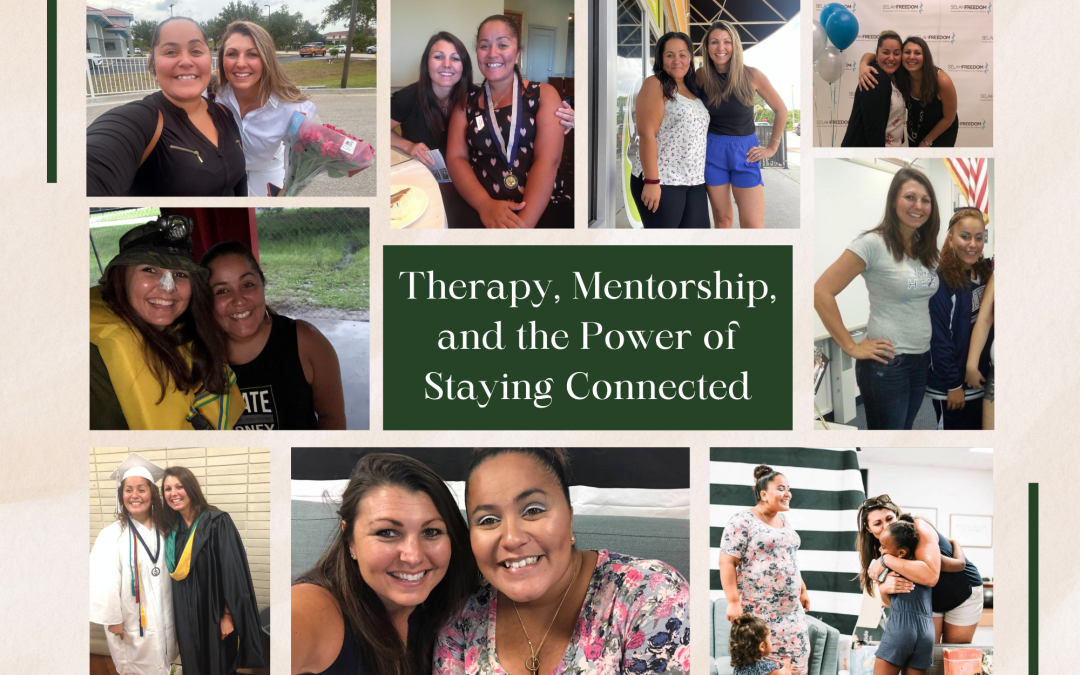
In a recent Rooted and Restored Podcast episode, I had the privilege of sitting with Aisha, now an intern at Rooted Therapies, reflecting on a relationship that began nearly fifteen years ago. What stood out in this conversation was a lived illustration of how therapy takes root and deepens when supported by safe relationships over time.
Therapy as the Starting Place
For many people, therapy is where self-trust begins to form. When someone has lived through trauma, instability, or generational patterns, trusting oneself can feel unfamiliar. Trauma-informed research consistently emphasizes that healing starts with safety, consistency, and attuned relationships all core elements of effective therapy (SAMHSA, 2014).
Aisha shared that early on, her hesitation wasn’t really about trusting others. It was about not yet trusting herself. That experience is common, especially for individuals whose nervous systems have learned to stay on high alert. Therapy helps create enough safety for that internal trust to slowly return.
Mentorship as a Parallel Support
Our relationship existed alongside therapeutic work, not instead of it. Mentorship became a place where insight could be practiced in real life through honest conversations, accountability, and shared experience.
Relational neuroscience reminds us that healing does not happen only through insight, but through repeated experiences of safe connection (Siegel, 2020). When therapy is paired with supportive relationships, the work often integrates more fully into daily life.
Mentorship does not require having everything figured out. Often, it simply means being a few steps ahead and willing to show up honestly. Presence, boundaries, and authenticity matter more than advice, a principle that aligns closely with effective therapeutic practice.
Community and Regulation
Humans are wired for connection. Our nervous systems are shaped not just by what we think, but by how safe we feel with others. While therapy helps people understand their nervous systems, community often helps them experience regulation in real time.
In our conversation, we reflected on seasons of growth, rupture, repair, and reconnection. These moments mirror what happens in therapy and are a normal part of healing. Research in trauma-informed care consistently highlights that repair, not the absence of difficulty, is what builds resilience and emotional strength (Herman, 2015).
Repair Is Not Failure
There was a season in our relationship where misunderstanding could have ended everything. Instead, it became a moment of growth. Hard conversations were had. Perspectives were shared. Repair happened.
This is something therapy prepares people for learning how to tolerate discomfort, communicate honestly, and stay engaged rather than disconnect. Relational research continues to show that repair strengthens trust and deepens connection over time.
Healing That Continues Forward
Today, Aisha is completing her graduate program, raising her children, and supporting others through her work at Rooted Therapies. Her story reflects what public health research often refers to as protective factors: stable relationships, mentorship, and community support all of which are linked to long-term emotional wellbeing.
Therapy provided a framework and language that helped guide the work we now share. Through relationship and mentorship, those principles were lived out and reinforced over time, allowing healing to continue forward through the lives she now touches.
A Gentle Encouragement
If you are in therapy and feel discouraged by how slow growth can sometimes feel, you are not doing anything wrong. Healing is layered. Therapy is not a quick fix; it is a steady, meaningful process.
And if you are considering therapy, know this you do not need clarity or confidence to begin. You only need willingness.
At Rooted Therapies, we believe healing is supported both inside and outside the therapy room. Therapy anchors the work. Relationships help it take root.
If you are ready to begin or continue your therapeutic journey, we invite you to schedule a free 15-minute phone consultation where we can connect, answer your questions, and help you take the next rooted step forward.
References
American Psychological Association Presidential Task Force on Evidence-Based Practice. (2006). Evidence-based practice in psychology. American Psychologist, 61(4), 271–285.
https://doi.org/10.1037/0003-066X.61.4.271
Herman, J. L. (2015). Trauma and recovery: The aftermath of violence—from domestic abuse to political terror (2nd ed.). Basic Books.
Siegel, D. J. (2020). The developing mind: How relationships and the brain interact to shape who we are (3rd ed.). Guilford Press.
Substance Abuse and Mental Health Services Administration. (2014).SAMHSA’s concept of trauma and guidance for a trauma-informed approach. U.S. Department of Health and Human Services.https://ncsacw.samhsa.gov/userfiles/files/SAMHSA_Trauma.pdf
Van der Kolk, B. A. (2014). The body keeps the score: Brain, mind, and body in the healing of trauma. Viking.
Substance Abuse and Mental Health Services Administration. (2020). Trauma-informed care in behavioral health services (Treatment Improvement Protocol 57).
https://www.samhsa.gov/resource/ebp/trauma-informed-care-behavioral-health-services
Centers for Disease Control and Prevention. (2023). Protective factors to promote well-being.
https://www.cdc.gov/violenceprevention/about/protective-factors.html
FAQs
Q1. How does mentorship contribute to personal growth? Mentorship plays a crucial role in personal growth by providing guidance, wisdom, and accountability. Mentors offer insights from their own experiences, challenge limiting beliefs, and help individuals see potential in themselves they might not recognize. This relationship accelerates progress and helps overcome obstacles more effectively than self-help alone.
Q2. What’s the difference between a mentor and a sponsor? While both support personal growth, mentors typically offer broader wisdom and expertise based on similar life experiences. Sponsors, often found in recovery communities, provide more focused accountability and guidance through specific processes, involving regular check-ins and clear expectations.
Q3. How can I build a community that supports my personal growth? Start by identifying 2-3 trusted individuals who understand your goals. Establish regular check-ins and clear expectations for support and accountability. Gradually expand your circle as trust deepens. Look for people who will both celebrate your wins and lovingly challenge your blind spots, creating a balance of encouragement and honest feedback.
Q4. What are the key elements of effective mentorship? Effective mentorship is built on trust, authenticity, and mutual respect. It involves clear communication, setting goals, providing constructive feedback, and offering both support and challenges. The mentor should see potential in the mentee and help bring it out, while allowing space for the mentee to create their own path.
Q5. Can therapy replace the need for mentorship? While therapy is valuable for understanding personal issues, mentorship fills a different role. Therapists help uncover and process emotional wounds, but mentors provide practical guidance for applying insights in real-life situations. Ideally, therapy and mentorship can work together to provide a comprehensive approach to personal growth and development.